The call almost never starts with the AC. It starts with a sound at five in the morning coming through the bedroom wall, a streak down the outside of the building that was not there in June, or an air conditioner that smells faintly of something organic every time it kicks in. Then somebody leans out of the window far enough to look down at the service ledge, and there it is: a flat mess of twigs wedged into the gap under the outdoor unit.
Of all the places a pigeon could nest on a flat, the AC ledge is the one it keeps choosing. That is not bad luck — the ledge is genuinely the best address on the building, and it is worth knowing why before you decide what to do about it.
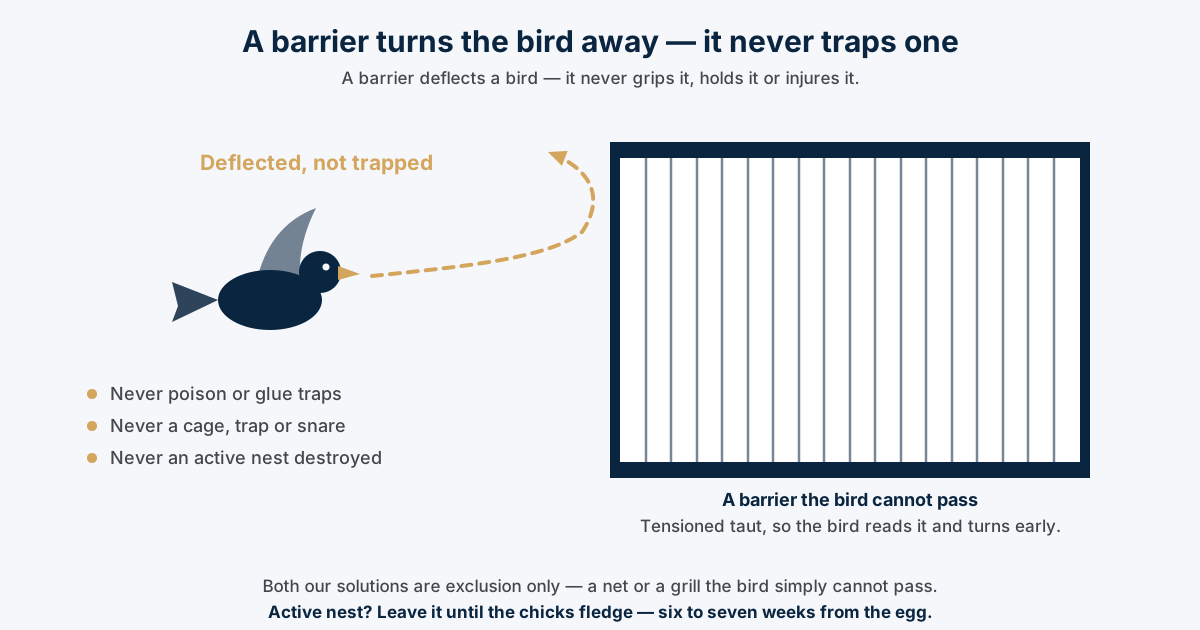
The short version: the AC ledge is warm, shaded, out of the wind and invisible from inside the flat, so a nest there survives longer than one anywhere else. Nothing you spray or hang will change that. The only thing that ends it is a barrier across the ledge — a net wrap, which is temporary, or the invisible-grill line extended across the service ledge, which is permanent. And if there are eggs up there already, close the ledge after the chicks fly, not before.
Why the AC ledge, and not the railing
A pigeon choosing a nest site is running through a short checklist, and the service ledge ticks every item on it in a way an open railing never does.
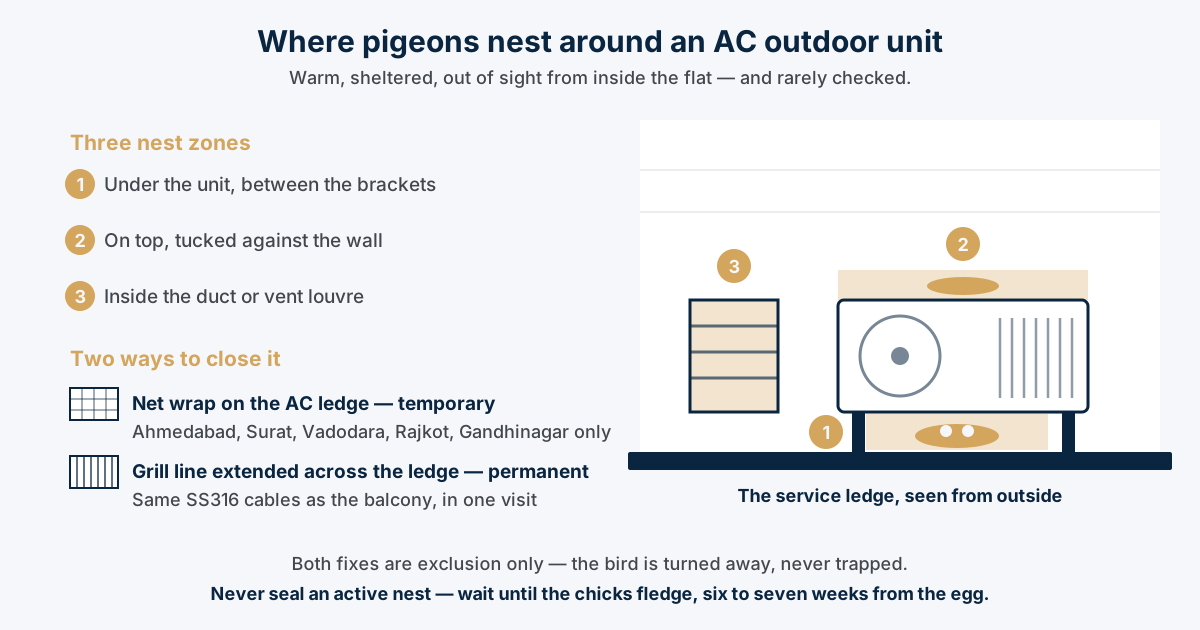
It is warm. An outdoor unit rejects heat for hours a day through most of the Indian year. The cavity underneath it, between the two wall brackets, holds that warmth after the compressor stops. In a Gujarat winter that matters; in the monsoon, a dry warm pocket matters even more.
It is sheltered on three sides. The unit is a roof. The wall is a back. The brackets are walls. What you are looking at, from a pigeon's point of view, is a purpose-built cave with a view, and it is out of the driving rain and out of the afternoon sun in a way that the parapet corner is not.
Nothing goes past it. The ledge is usually the one surface of the home that the household never walks on, leans over or cleans. No footfall, no broom, no washing being hung. A nest on the railing tends to get disturbed on day one. A nest under the AC gets weeks.
You cannot see it. This is the one that costs people the most. From inside the flat the ledge sits below the window line and behind the unit. By the time the evidence reaches you — the sound, the smell, the streaking outside — the pair has usually been through a full cycle already, and pigeons return to a site that worked. We went through that homing behaviour in our piece on why pigeons keep coming back to the same balcony, and the AC ledge is where it shows up most stubbornly.
What a nest up there actually does
Two separate problems, and they run on different timescales.
The mechanical one. Nest material is twigs, feathers, dust and whatever else was on the roof. It gets pulled against the coil fins and packed into the cavity under the unit, which is also where the condensate drainage runs. Fouled fins do not breathe the way clean fins do, and a blocked drain path finds somewhere else to go — usually the wall, sometimes the ceiling of the flat below. Droppings finish the job: fresh droppings are acidic, they hold moisture against metal, and fins, brackets and fixings are all metal. We are not going to quote you an efficiency figure, because that depends on your unit and how long it has been going on. Ask the technician who services it — they will have a view.
The household one. Nesting means droppings in volume, concentrated in one spot, on a ledge that rarely gets cleaned, drying and turning to dust that the balcony breeze picks up. That is worth handling properly rather than casually, and we have written up the sensible precautions in the guide to pigeon droppings and health risks — the short version is a mask, gloves, wet the surface before you touch it, and never sweep dry. There is a Hindi version of the same guidance in kabutar beet se bimariyan if that is easier to pass on to whoever actually cleans the balcony.
If there is already a nest up there
Look before you reach. What you do next depends entirely on what is in it.
An empty nest, or bare twigs, comes down today. Wet it down first so the dust stays put, bag it sealed, and understand that you have bought yourself days rather than weeks — the pair will rebuild on the same warm ledge almost immediately if nothing else changes.
A nest with eggs or chicks in it is a different decision. Our position, and the one we would want somebody to take with our building, is to leave it until the chicks have flown — roughly six to seven weeks from the egg — and to close the ledge the same week they go. That window is not a delay, it is the plan: you are getting the barrier measured and quoted while the nest finishes, so the crew comes the moment it is empty. The legal status of pigeons in India gets argued about more than it gets settled, so we would not lean on that either way; the practical argument is enough. The full version of the humane approach is in how to keep pigeons away without hurting them.
What does not work on an AC ledge: anything you have to reapply. Gels go sticky, then go dusty, then stop being sticky, and on a ledge you cannot reach that happens unsupervised. Reflective tape and hanging CDs are ignored within a week or two by birds that already know the ledge. Spikes leave the cavity under the unit — the actual nest site — completely open. We compared all of them honestly in nets vs spikes vs gel, and the AC ledge is the case where the deterrents look worst, because the one place you need to close is the one place they do not cover.
The fix is a barrier across the ledge
Once you accept that, there are two forms of it, and they are the same two choices as the balcony itself.
A net wrap across the AC ledge — the temporary option
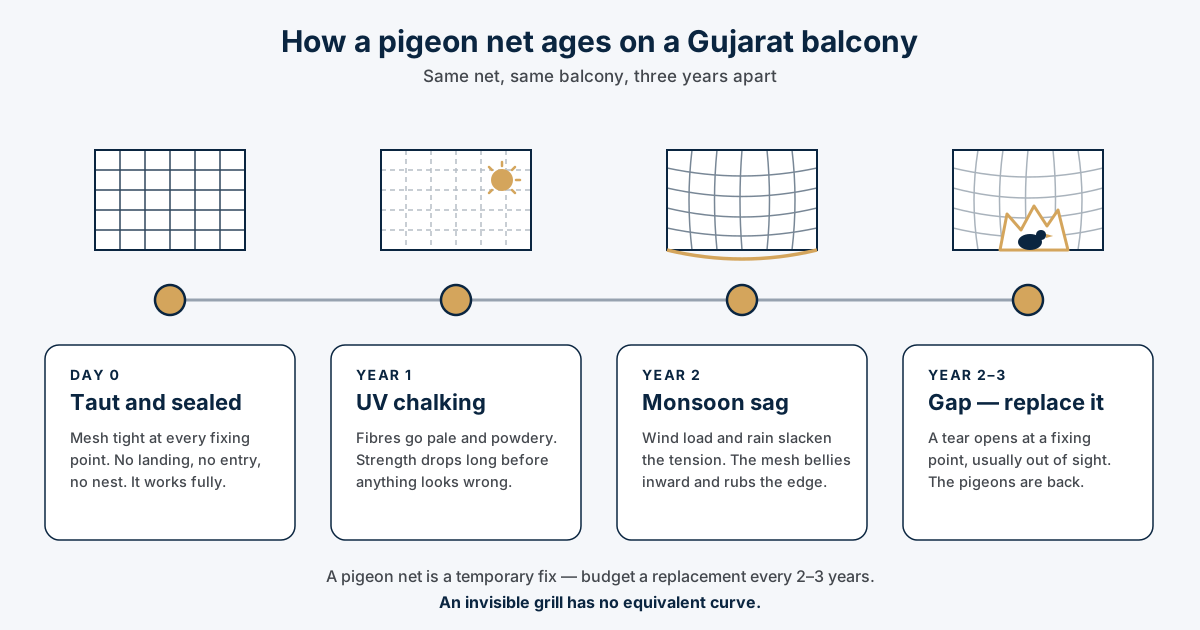
Mesh is taken across the ledge opening and around the service gap so the cavity under the unit is closed off, with the unit's airflow left clear and an access point left for servicing. It is a temporary fix on the same clock as any pigeon net: plan on 2-3 years before a gap opens, for the reasons laid out in how long a pigeon net actually lasts. We install pigeon nets in Ahmedabad, Surat, Vadodara, Rajkot and Gandhinagar only — rates are on the pigeon net for balcony page and broken down further in the pigeon net price guide. Outside those five cities we fit the permanent option instead.
The invisible-grill line extended across the ledge — the permanent option
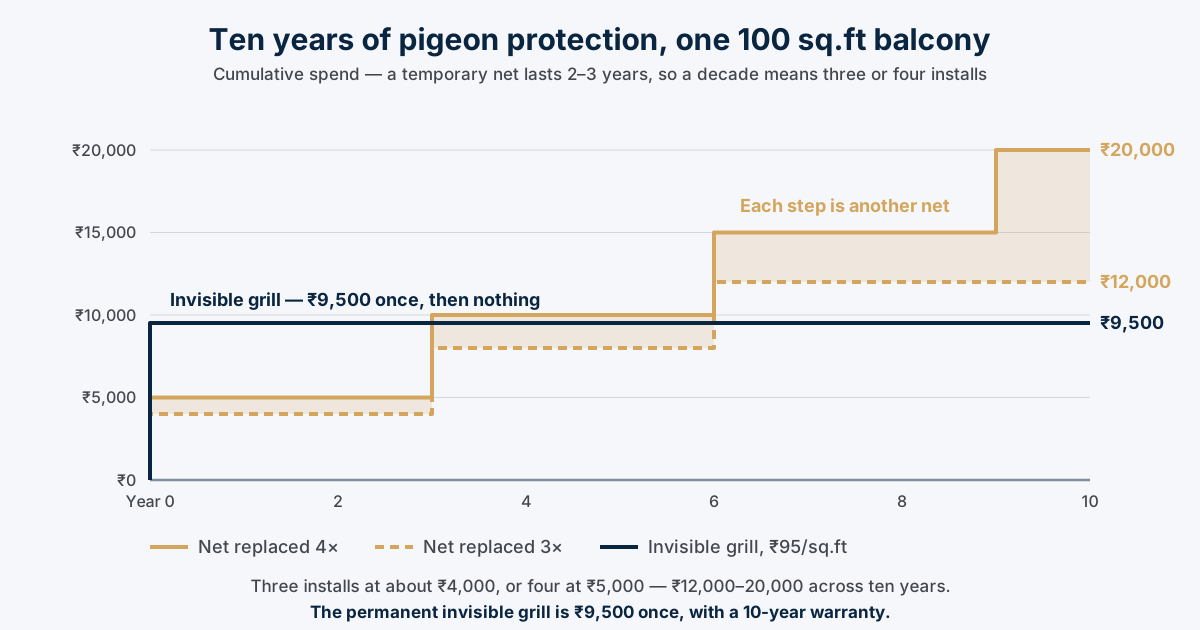
The other route is to keep going with the grill line. The same SS316 marine-grade cables that close the balcony opening are tensioned across the service ledge at the same 2-inch vertical pitch, which a pigeon can neither land on nor pass between. There is no mesh to tear, nothing that chalks in ultraviolet, and no second visit in three years. At ₹95/sq.ft it is about ₹9,500 once for a 100 sq.ft balcony, with a 10-year written warranty. The ledge is worth quoting as part of the same line rather than as an afterthought — the invisible grill for pigeons page covers the spec, and the pigeon net vs invisible grill comparison puts both columns side by side.
Do the balcony and the ledge in the same visit
This is the practical point of the whole article. Most AC-ledge jobs we quote turn out to be balcony jobs as well, because the households that have a nest on the ledge also have droppings on the balcony floor and a pair sitting on the railing at dusk. Closing one opening and leaving the other is the mistake the four entry points guide was written to stop: the birds are attached to the flat, not to the ledge, and an open parapet corner will do fine as a second choice.
Doing both in one visit is cheaper in the ways that are easy to miss — one survey, one crew, one day of your time, one warranty document. On the permanent route the maths is simply the same rate across a slightly larger area: if the service ledge adds, say, 20 sq.ft to a 100 sq.ft balcony, that is 120 sq.ft at ₹95/sq.ft, or ₹11,400 for the whole envelope closed at once. And the same install does a second job entirely, which is the subject of our companion piece on one install solving pigeons and child safety together.
What we would do with your ledge this week
Get eyes on it properly — from the window above, from the flat next door, or with a phone held out at arm's length, which is how a lot of our surveys begin. Establish whether the nest is empty or active, because that sets the timing and nothing else does. If it is active, use the six to seven weeks to get the ledge measured and both routes quoted, so the barrier goes up the week the chicks leave. If it is empty, take it down now and close the ledge before the pair rebuilds.
And while somebody is up there, look at the duct and exhaust mouths on the same wall — a broken louvre is a smaller opening and a worse place to find a nest. A free site survey covers the balcony, the ledge and the duct openings in one go, with the temporary route and the permanent one quoted on the same sheet, which is the only fair way to compare them.
References
Sources
- Histoplasmosis: the Histoplasma fungus spreads in bird and bat droppings that mix with soil and dustUS Centers for Disease Control and Prevention
- Psittacosis: Chlamydia psittaci infects many bird species and spreads to people through dried droppings and feather dustUS Centers for Disease Control and Prevention
Frequently Asked Questions
Common follow-up questions on this topic.
There is a pigeon nest in my AC outdoor unit — can I just remove it?
Check what is in it first. An empty nest, or one that is clearly just twigs, can come down today and should — the sooner the better, because the pair will rebuild on the same spot within days if the ledge is still open. If there are eggs or chicks in it, the humane answer is to leave it alone until the chicks have flown, which is roughly six to seven weeks from the egg, and to close the ledge the same week they go. Pulling an active nest is not something we do, and the legal position on pigeons in India is argued about more than it is settled, so we would rather not encourage it either way. Wear a mask and gloves whichever situation you are in, wet the droppings before you lift anything rather than sweeping them dry, and put the whole lot in a sealed bag. We have written the fuller version of the humane approach in our guide to keeping pigeons away without hurting them.
Can pigeons nesting on the AC ledge damage the outdoor unit?
It is not usually one dramatic failure — it is a slow accumulation. Nest material is twigs, feathers and dust, and it gets pulled against the coil fins and packed into the cavity under the unit, where it sits over the drainage path. Fins that are fouled do not breathe as well as clean fins, and a drainage path with debris in it backs up and drips where it should not. Droppings are the other half of it: they are acidic when fresh, they hold moisture against metal, and on the fins, the brackets and the fixings that is exactly the condition corrosion likes. We are not going to put a number on what it costs you in running efficiency, because that depends on your unit, your usage and how much has built up. What we will say is that every AC technician we have shared a ledge with has an opinion about pigeon nests, and none of them is a good one.
Can you net just the AC ledge, or does the whole balcony have to be done?
The ledge can be done on its own. A net wrap across the AC ledge is a temporary fix on the same 2-3 year clock as any other pigeon net — UV makes the mesh brittle, the monsoon finds the weak fixing, and a gap opens somewhere above eye level. We install pigeon nets in Ahmedabad, Surat, Vadodara, Rajkot and Gandhinagar only; everywhere else in India we fit the permanent option instead. The thing worth thinking about before you book just the ledge is that pigeons are not loyal to the ledge, they are loyal to your flat. Close the ledge and leave the parapet corner open and you have moved the nest, not removed it, which is why we would rather quote both openings and let you decide than close one and be called back in March.
Do pigeons actually get inside ducts, vents and exhaust openings?
Yes, and it is the version of this problem people find out about last, because you cannot see into a duct from the balcony. The usual entry is a bathroom or kitchen exhaust whose louvre has broken, jammed open or been removed during a repair and never put back, or a service-shaft opening that was never covered at all. Once a bird is inside, the nest sits in the shaft, the smell comes back down the pipe into the room, and the exhaust stops moving air properly. The fix is a cover rather than a chemical: a stainless mesh guard over the duct mouth, sized so the exhaust still breathes. If you have a smell you cannot place and an exhaust fan that has gone quiet, put the duct mouth on the list before you assume it is the drain.
Choose your fix
Temporary net, or a permanent solution?
Pigeon net — temporary fix (2–3 years)
Installed by us in Ahmedabad, Surat, Vadodara, Rajkot & Gandhinagar only
See Pigeon Net PricingInvisible grill — permanent, child-safe
One-time SS316 marine-grade install. 10-year written warranty. No repeat cost, no re-tensioning.
Get Grill QuoteSee the full side-by-side: Pigeon net vs invisible grill → · Hindi mein padhein: kabutar jali vs invisible grill →
Ready to talk?
Free site visit. Itemised quote. No follow-up spam.
Same crew that measured you installs your grill. SS316 marine-grade only. 10-year written warranty.