Ask three installers what a pigeon net costs and you will get three numbers, none of them written down. That is the actual problem with pigeon net pricing in India — not that it is expensive, but that almost nobody publishes it, so you find out what you are paying at your own door with a crew already standing in the lift lobby.
Our rates are the exception, and they live on one page rather than in this article. The live rate card is here — per-sq.ft rates for UV-stabilised HDPE and heavier knotted nylon, the ₹2,500 minimum job value, and the typical installed balcony figure of ₹2,500–5,000. Keep that tab open. This page is the other half of the answer: what puts one balcony at the bottom of that band and the flat two floors up near the top, which lines in a quote are real and which are bait, and the ten-year number that decides whether a net was the right purchase at all.
The short version: a typical balcony is ₹2,500–5,000 installed, priced per sq.ft of opening with a ₹2,500 minimum job. Mesh material, mesh size, floor height, access and the number of openings move the number — not haggling. And because a net is a temporary solution with a 2–3 year life, ten years of cover is three or four installs, ₹12,000–20,000, against ₹9,500 once for a permanent invisible grill.
How a pigeon net is actually priced
Nets are quoted per square foot of opening, and the opening is the whole aperture you are closing — not the railing, not the floor area of the balcony. A 10-foot-wide balcony with an 8-foot clear height is 80 sq.ft of net whether you use the balcony or not.
Then there is a floor under the multiplication, and this is where most of the confusion in the market lives. A crew visit, the ladder work, the drilling and the tensioning cost broadly the same whether the opening is 40 sq.ft or 200 sq.ft, so there is a minimum job value — ₹2,500 for us, stated upfront. A single small window is not going to be forty square feet times a rate; it is going to be the minimum. Installers who do not publish a minimum usually still have one — it just tends to arrive as padding in the line items after the survey.
So the useful mental model is this: your bill is the larger of (rate × measured area) and the minimum job, plus anything genuinely extra that was named before work started. On a typical balcony that lands in the ₹2,500–5,000 band. If you want a specific number for your own opening, measure the width and clear height before you call anybody — it takes two minutes and it changes the conversation completely.
The five things that move your quote
1. Mesh material
UV-stabilised HDPE is the standard choice for balconies and windows. Heavier knotted nylon costs more per sq.ft and earns it on high-exposure balconies and duct areas where the mesh takes real wind load. Both rates are on the rate card. The third material is the one that is not on any rate card: plain plastic mesh sold by weight and cut to size, which is what an impossible quote is quoting for. It is not UV-stabilised in any meaningful sense and a hot Gujarat season is enough to turn it brittle.
2. Mesh size and ply
A pigeon-grade mesh is typically around 50 mm — roughly two inches. Nets with a wider aperture are cheaper per sq.ft and are usually sold for sparrows or for crop cover; a pigeon squeezes through more than people expect. Ply, the thickness of the twine, is the other lever, and heavier ply costs more. Neither of these shows up in a verbal quote, which is exactly why the written one should name both.
3. Floor height and access
A second-floor balcony with a ledge is a ladder job. A fourteenth-floor balcony on a tower with no ledge and no anchor point is rope work, and rope work is a different trade with different equipment. Our published rate covers normal balcony access and anything beyond it is quoted at the survey — but the important thing is that it is quoted at the survey, in front of you, rather than discovered on the morning of the install.
4. Shape and fixing points
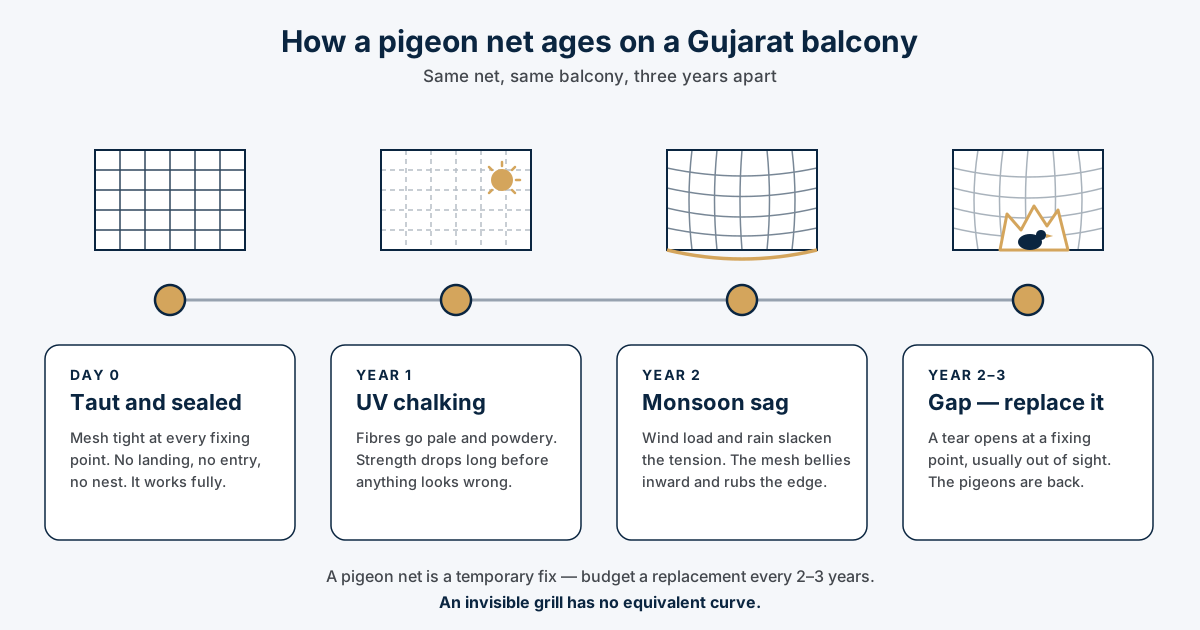
A rectangle is cheap to close. Anything that is not a rectangle — a curved parapet, a stepped balcony, a corner with a structural column through it, a sloping soffit — adds fixing points, and fixing points are time. A net is only as good as its tension, so the extra fixings are not padding; a shape that is under-fixed sags in its first monsoon and is a gap by its second.
5. How many openings you are actually closing
This is the biggest single difference between two quotes for what looks like the same flat. A balcony face is one opening. The AC ledge behind it, the utility window, the duct gap at the side — those are the places the nest goes, and a quote that covers only the balcony face is cheaper because it is doing less. The four entry points guide walks through all of them; take that list to the survey and make each installer quote against the same scope, or you are comparing prices for different jobs.
Quote red flags worth refusing
None of these are exotic. All of them are ordinary, and all of them resolve the same way — by asking for one more line in writing.
A per-sq.ft teaser that excludes the rope and fixings. A rate that covers only the mesh is a material price dressed as an installed price. The perimeter rope, the hooks, the labour and GST are the majority of what makes a net stay tight for three years. Ask whether the rate is installed and tensioned, or supplied.
“Free survey” used as a door-opener. A free survey is normal and ours is free too. The tell is a survey that arrives without a published rate behind it, so the price is invented in your living room, once you have taken time off and the crew is already there. If the rate exists before the visit, the visit is a measurement. If it does not, the visit is the negotiation.
No mesh material or mesh size in writing. A quote that says “pigeon net, balcony” can be honoured with anything. Name the material and the aperture on the paperwork.
A verbal lifespan. Anyone telling you a net will last eight or ten years is either selling a different product or has not seen one age on a west-facing balcony. Plan on 2–3 years; our guide to how long a pigeon net lasts goes through the three ways they fail and why the mesh is rarely the first thing to go.
A number far below everyone else. It usually is what it looks like: unstabilised mesh, thin ply, fewer fixings, or all three. A bargain net that turns brittle inside a year costs more per year than a properly fitted one that lasts three.
The number that is missing from every net quote
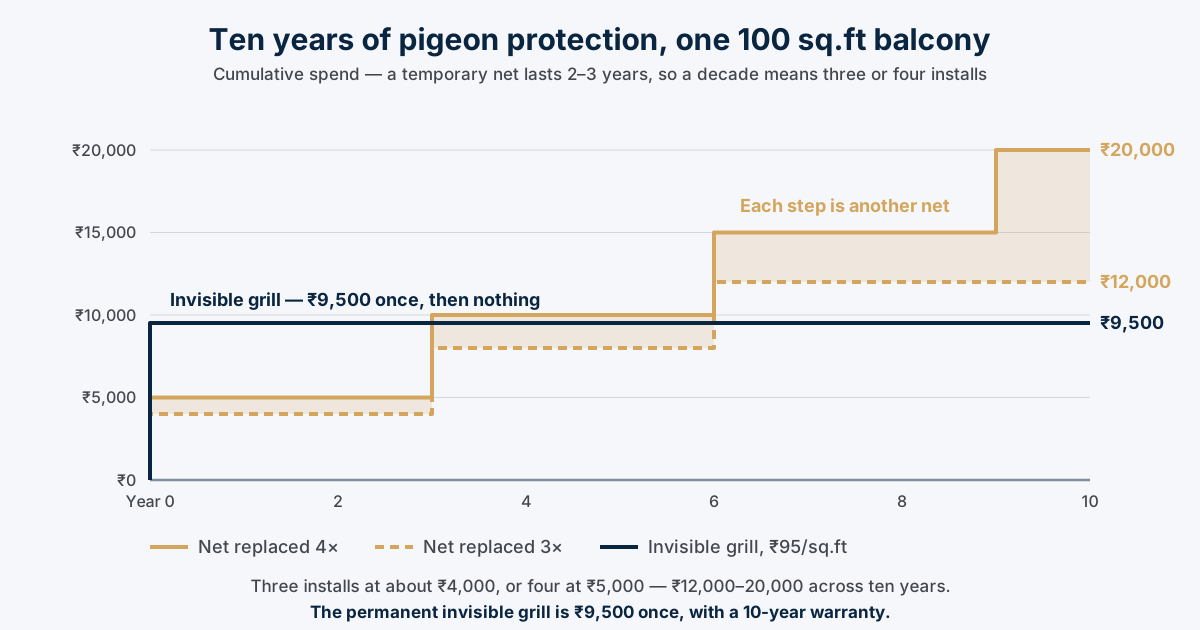
Here is the part that changes the decision, and it is the chart at the top of this page. A pigeon net does not have a price; it has a payment schedule. The mesh lasts 2–3 years in Indian sun and wind, and a replacement is essentially a fresh install — the old mesh comes down, new mesh goes up — so ten years of continuous cover is three or four installations rather than one.
Run it and you get ₹12,000–20,000 across the decade for a typical 100 sq.ft balcony. The bottom of that band is roughly three cycles at about ₹4,000 each; the top is four cycles at ₹5,000. Against it sits a permanent invisible grill at our Gujarat rate of ₹95/sq.ft — ₹9,500 once for the same 100 sq.ft balcony, with a 10-year written warranty and nothing after it.
The crossover is worth stating plainly, because it is earlier than people assume. Even at the very bottom of the net range, four installs at ₹2,500 each is ₹10,000, which has already passed the grill's ₹9,500. At the top of the range you pass it at the very first replacement — ₹5,000 twice is ₹10,000. And the money is only half of it — each replacement has gap weeks in front of it, the time between a tear opening somewhere above eye level and the crew coming back, which is when the droppings and the nesting restart.
When a cheap net is genuinely the right call
We install nets, and there is a real set of households for whom the temporary option is the correct answer and not a compromise. If you rent, a net comes down cleanly at the end of a tenancy and never becomes a deposit argument. If you are moving within two or three years, you will never reach the replacement that makes the math turn. And if ₹9,500 is not available this month, a temporary net fitted this week beats a permanent grill postponed for two years while the balcony fills up — the best fix is the one that actually gets installed.
One geography note before you plan around it: we install pigeon nets in Ahmedabad, Surat, Vadodara, Rajkot and Gandhinagar only. Everywhere else in India we fit the permanent invisible grill instead, so if you are outside those five cities the net line on the rate card is not something we can quote you. Full spec and scope for the net itself is on the pigeon net for balcony page.
The version with no payment schedule
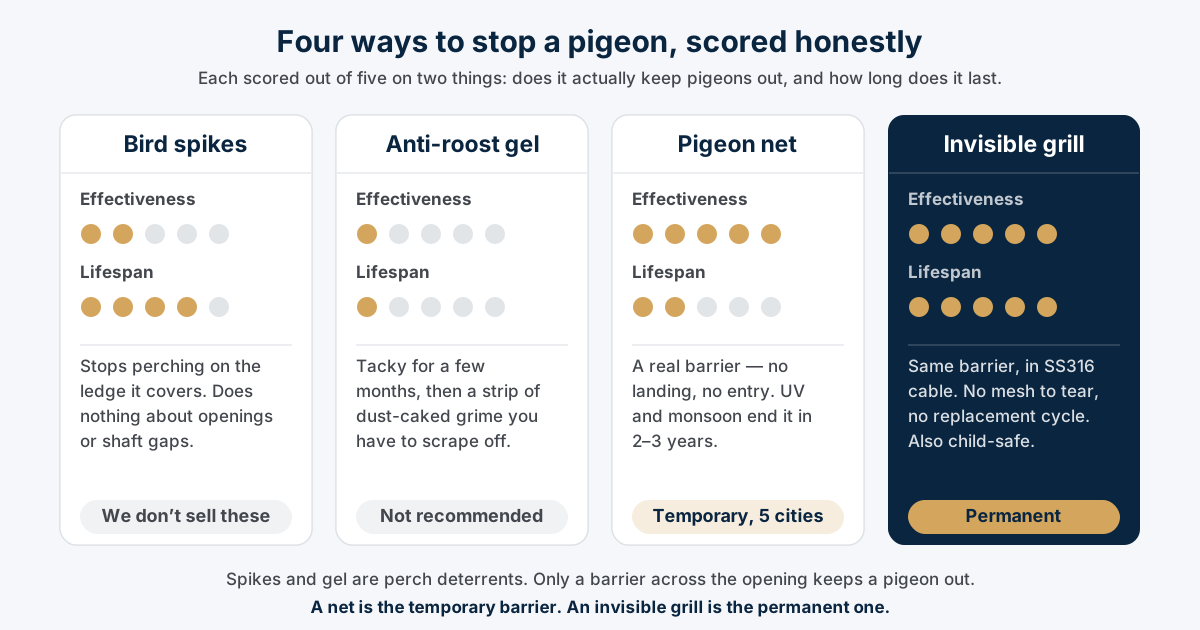
An invisible grill is priced the same way a net is — per square foot of opening — which makes it unusually easy to compare. At the Gujarat rate of ₹95/sq.ft, that same 100 sq.ft balcony is ₹9,500, once. What you are buying for the difference is SS316 marine-grade cable tensioned vertically at a 2-inch pitch: nothing for a pigeon to land on, nothing to pass between, no mesh to chalk in the sun, no tension to lose after a monsoon, and no year-two inspection to remember.
The other half of the difference is safety, and it is the one line a net quote can never match. Mesh is not load-rated, so a net is a bird barrier and nothing more; the grill's cables are load-tested, which makes the same installation child-safe and pet-safe. If you want both columns side by side with the ten-year totals, they are on the pigeon net vs invisible grill page.
What to do before you accept any quote
Measure the width and clear height of every opening you want closed, including the AC ledge. Read the rate card so you arrive at the survey already knowing the per-sq.ft rate and the minimum job. Then ask each installer for one written line covering material, mesh size, area, rate, minimum and any access charge — and ask what happens in year three, because the answer tells you whether they have been honest about the product.
Our own survey is free, takes both measurements at once, and comes back with two numbers rather than one: the temporary net and the permanent grill, on your actual balcony. Compare those two on the ten-year row, not the first row — in our experience that is the row that changes minds at the survey table, and it is the one the quote almost never carries.
Frequently Asked Questions
Common follow-up questions on this topic.
How much does a pigeon net cost for a balcony?
A typical balcony job comes to ₹2,500–5,000 installed, and our minimum job value is ₹2,500. The spread inside that band is not a negotiating game — it is the size of the opening, the mesh you choose, how many fixing points the shape needs and whether the crew can reach the outside face safely. Our per-sq.ft rates for HDPE and heavier nylon are published on the pigeon net price page rather than quoted at your door, which is the part most people find unusual. Two things to hold on to when you compare quotes: a rate per sq.ft is not your bill until somebody has measured the opening, and a net is a temporary solution, so the honest figure is the one across ten years rather than this week.
Is a pigeon net priced per square foot or per job?
Both, and that is why quotes confuse people. The rate is per sq.ft of opening, so area sets the base. But a crew visit costs roughly the same whether the opening is 40 sq.ft or 200 sq.ft, so there is a minimum job value — ₹2,500 in our case — and small windows land on that floor rather than on the multiplication. If you take a low per-sq.ft teaser, multiply it by your balcony and expect that to be the total, the number at the end of the visit will be higher and it will feel like a bait. Ask for the rate, the measured area, the minimum, and anything quoted separately, all in one written line before the crew starts.
What should a pigeon net quote include?
The mesh, the perimeter rope, the fixings, the labour and GST — installed and tensioned, not just the material. Extras that genuinely exist should be named at the survey rather than added at the door; rope access on a high floor with no ledge is the common one. The quote should also state the material by name — UV-stabilised HDPE or knotted nylon — because a quote that says only 'pigeon net' can be met with the cheap plastic mesh sold by weight, which is the one that goes brittle in a single hot season. If the paperwork will not name the mesh, treat the price as unrelated to the product.
Is a pigeon net cheaper than an invisible grill?
Today, yes. Over ten years, no. A net installation is ₹2,500–5,000 and lasts 2–3 years in Indian conditions, so a decade of cover is three or four installs rather than one. That comes to ₹12,000–20,000 in total: the floor is roughly three cycles at about ₹4,000 each, the ceiling is four cycles at ₹5,000. An invisible grill is ₹95/sq.ft, about ₹9,500 once for a 100 sq.ft balcony, with a 10-year warranty and no replacement cycle. And even if your balcony sits at the very bottom of the net range, four installs at ₹2,500 each is ₹10,000 — still more than the grill costs once. That is not an argument that nobody should buy a net — if you rent, or you are moving inside three years, the temporary option is genuinely the cheaper one for you. It is an argument for knowing which of those two situations you are in before you pay.
Choose your fix
Temporary net, or a permanent solution?
Pigeon net — temporary fix (2–3 years)
Installed by us in Ahmedabad, Surat, Vadodara, Rajkot & Gandhinagar only
See Pigeon Net PricingInvisible grill — permanent, child-safe
One-time SS316 marine-grade install. 10-year written warranty. No repeat cost, no re-tensioning.
Get Grill QuoteSee the full side-by-side: Pigeon net vs invisible grill → · Hindi mein padhein: kabutar jali vs invisible grill →
Ready to talk?
Free site visit. Itemised quote. No follow-up spam.
Same crew that measured you installs your grill. SS316 marine-grade only. 10-year written warranty.