There is a forward that does the rounds in every apartment group, usually with a photograph of a balcony ledge attached, and it says that pigeon droppings cause lung disease. There is also a neighbour who says it is only bird poo and to stop fussing. Both of them are wrong in a way that is unhelpful if what you actually have is a crusted pile behind the AC unit and a two-year-old who plays on that balcony.
So here is the accurate middle. It is narrower than the forward and less relaxed than the neighbour, and the practical upshot is a short list of things to do rather than a reason to panic. We fit balcony barriers for a living, not medicine — where this touches health we have kept to what is documented and hedged where the evidence is thin, and anything symptomatic belongs with a doctor rather than with us.
The short version: the risk is not the dropping, it is the dried dust that comes off an old deposit when somebody disturbs it. Two fungal infections, histoplasmosis and cryptococcosis, are rare but genuinely documented from inhaling that dust, and young children, elderly relatives, asthmatic and immune-compromised people are the ones who need more care. Damp it down, mask and gloves, never dry-sweep. Then close the opening, because cleaning alone buys you about a month.
Why the dust matters more than the droppings
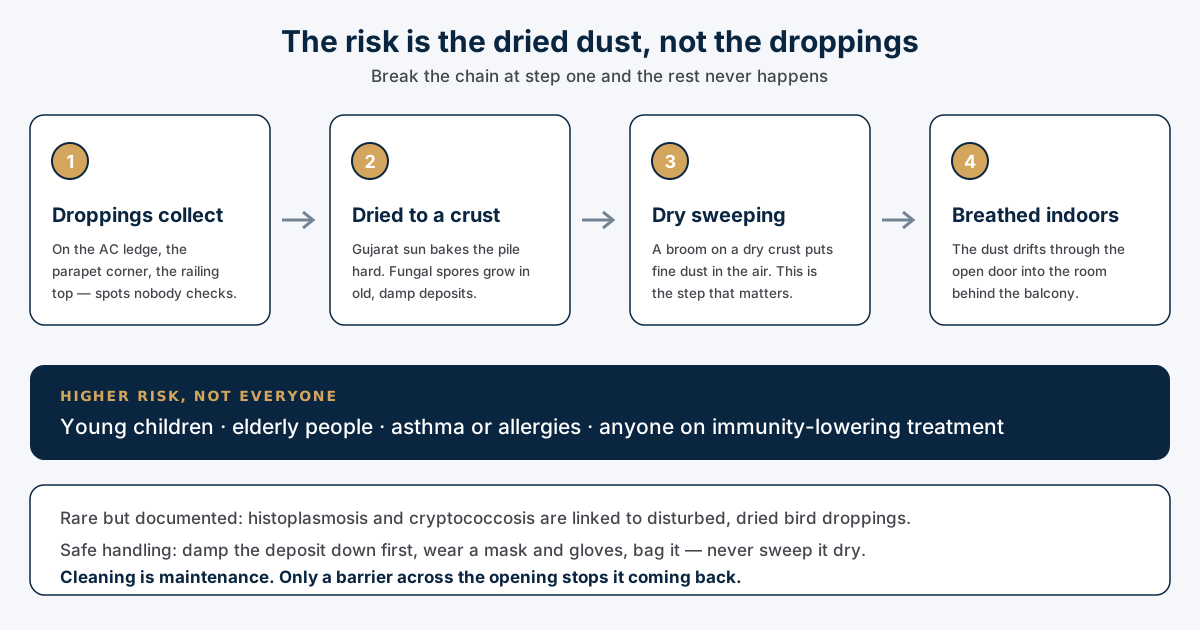
A fresh dropping is unpleasant, unhygienic and largely inert. What changes the picture is time. Left on a ledge in the Gujarat sun, a pile dries into a hard crust; where deposits stay damp and undisturbed for long stretches — inside a shaft, under an AC unit, in a corner nobody reaches — they can also support fungal growth. Neither state is a problem while it sits there.
The problem is the moment it is disturbed. Take a dry broom to a crusted ledge and you convert a static deposit into a cloud of fine particles at face height, in an enclosed-ish space, next to an open door into the room where everyone sits. That is the step the diagram at the top of this page is built around, and it is the step almost every household gets wrong, because sweeping is the obvious thing to do.
This is also why the answer is reassuring for most people and genuinely worth taking seriously for some. Walking past droppings does not put them in your lungs. Blasting a two-year accumulation with a pressure washer does.
What is actually documented
Keeping this deliberately conservative, because there is a lot of loose writing on the subject:
Histoplasmosis. A fungal infection associated with soil and material enriched by bird or bat droppings. Contracted by inhaling spores from disturbed material. In most healthy people it passes as a mild flu-like illness or with no symptoms at all; it is more serious for people with weakened immunity. Rare, but documented, and the exposure route is specifically the airborne dust.
Cryptococcosis. Another fungal infection, linked in the literature to accumulated pigeon droppings in particular. Again rare, again inhaled, and again disproportionately a concern for people with compromised immune systems rather than for the general household.
Psittacosis. A bacterial infection more usually associated with parrots and other cage birds, but reported in pigeons. Uncommon.
Allergy and asthma triggers. The most common effect by a wide margin, and the least dramatic. Feather fragments and dropping dust are recognised irritants; a household with an asthmatic child and a pigeon-occupied balcony often has a symptom pattern before it has an infection risk. Heavy, sustained exposure of the kind pigeon keepers get is linked to a hypersensitivity lung condition, but a balcony is not that level of exposure.
Bird mites. An abandoned nest can leave mites behind that come indoors looking for a host. Not dangerous, thoroughly unpleasant, and a good reason to clear a nest properly rather than leaving it in place after the birds have gone.
Two things are worth saying plainly. Every item on that list is uncommon. And every item on that list gets less likely the less material is sitting on your balcony, which is the whole reason the practical advice below is short.
The safe way to clean pigeon droppings
This is the part to actually act on. It takes about twenty minutes for a normal balcony and it removes nearly all of the risk described above.
Damp it down first. Spray or pour water over the deposit and give it a few minutes to soften. Wet material lifts in lumps. Dry material becomes dust. If you do only one thing from this list, do this one.
Mask and gloves. An N95 if you have one from the flu seasons, a surgical mask at minimum, plus disposable gloves. Not theatre — the mask is doing the actual work.
Keep the room door shut. Ventilate the balcony, isolate the house. The open door behind you is how anything airborne gets to the people who are not wearing a mask.
Scrape, do not sweep. Lift the softened material with a putty knife or a stiff piece of card straight into a bag. Tie the bag and put it in the bin — not over the parapet onto the flat below.
Then wash the surface. Soapy water, then a household disinfectant, then rinse.
No pressure washer, no blower, no vacuum. All three aerosolise the deposit, which is precisely the failure mode you are avoiding. A domestic vacuum also blows the fine fraction straight back out through its exhaust.
Wash afterwards. Hands and forearms; clothes straight into the laundry.
Two situations where you should hand it over: a large, long-standing accumulation, and anything inside an enclosed duct or shaft. A confined space concentrates whatever comes off the deposit, and a professional cleaning crew has the respirator and the disposal that a balcony job does not need. If there is an active nest, leave it until the chicks fledge — roughly six to seven weeks from the egg — and do the clean-up then.
If you are pregnant or immune-compromised, do not do this job. Not because a balcony clean-up is dangerous in the ordinary case, but because this is the one household task where the cost of being wrong falls entirely on the person doing it, and it is trivially delegated. Ask someone else in the house, or pay a cleaning crew.
Why cleaning is maintenance, not a solution
Here is the pattern we hear on the phone almost every week: the balcony was scrubbed in June, and by August the droppings are back and there is a nest behind the AC unit again. Nothing went wrong. Cleaning removes the mess without changing what attracted the birds, which is a flat, sheltered ledge with a wall at its back — a better cliff than any cliff. Pigeons have strong site fidelity, so the same pair returns to the same ledge, and so do the chicks they raised on it.
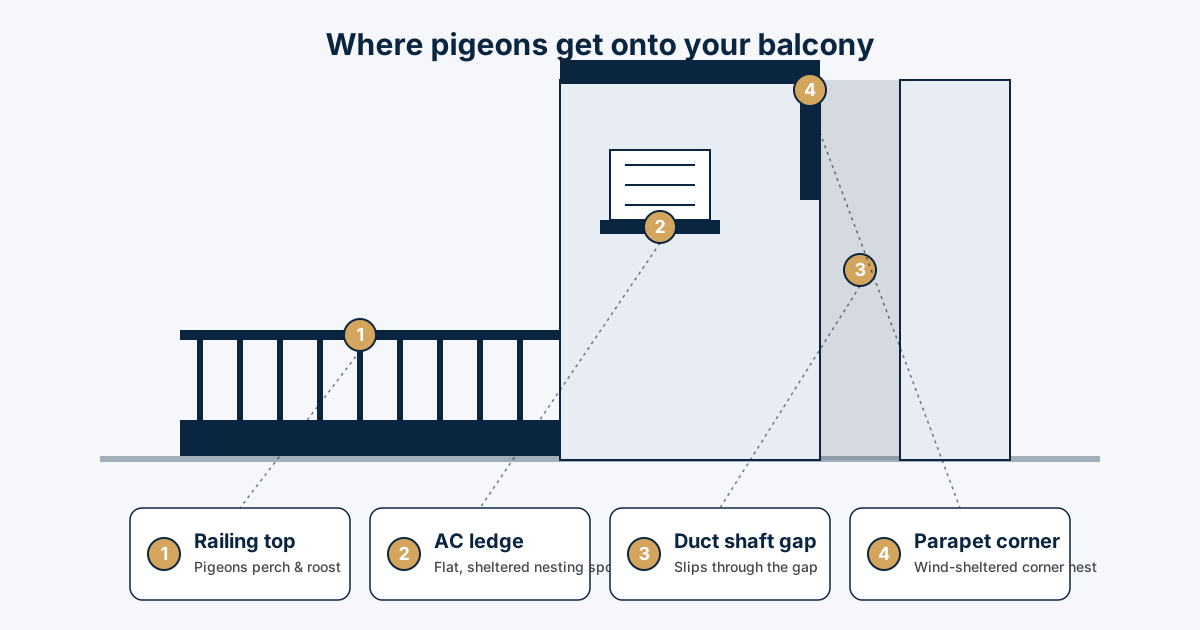
The sequence that works is clean, then close, in the same week. Closing means a physical barrier across every opening the birds use — the railing line, the AC ledge, the shaft gap and the parapet corner, all four of which are mapped in our guide to getting rid of pigeons permanently. Netting the balcony face and leaving the AC ledge open is the single most common mistake in this category, and it relocates the nest by a metre rather than removing it.
The two barriers, and which one to choose
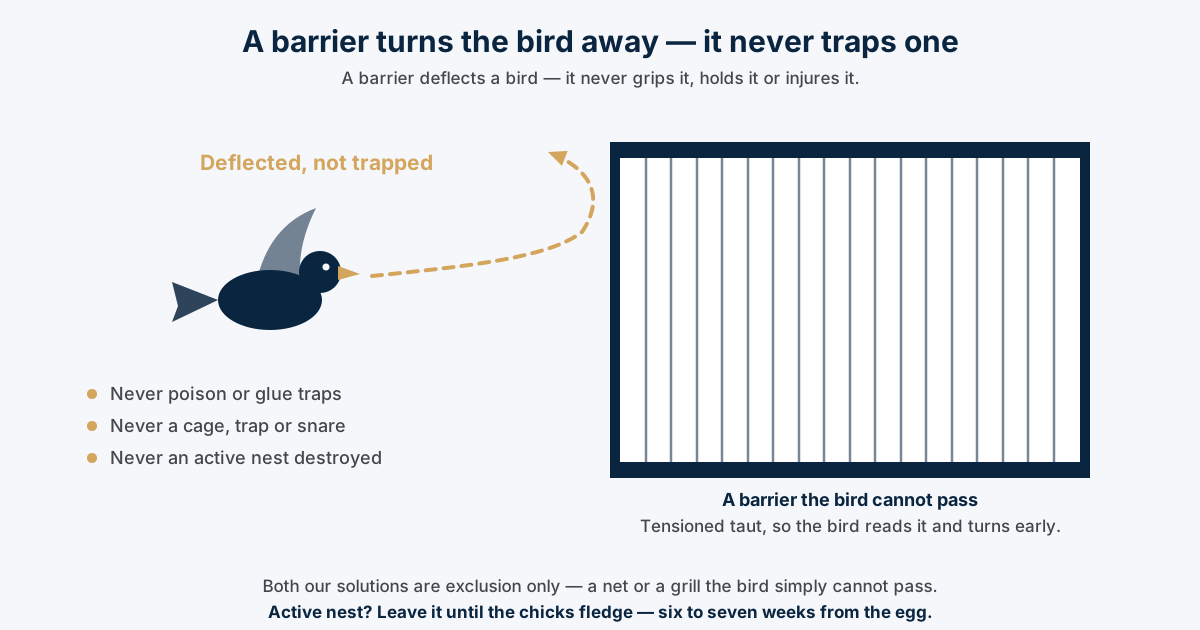
A pigeon net is the temporary version: tensioned mesh across the opening at ₹2,500–5,000 per installation, which stops the droppings immediately and completely. It is temporary because UV and monsoon wear it out — plan on replacing it every 2–3 years, roughly ₹12,000–20,000 across ten years, and we have written up the failure modes in detail in how long a pigeon net lasts. We install nets in Ahmedabad, Surat, Vadodara, Rajkot and Gandhinagar only; elsewhere in India we fit the permanent option instead. Rates are on the pigeon net for balcony page.
An invisible grill is the permanent version: SS316 marine-grade cables tensioned at a 2-inch pitch, which a pigeon cannot land on or pass through, at ₹95/sq.ft — about ₹9,500 once for a 100 sq.ft balcony, with a 10-year warranty and nothing to replace. It is the option we recommend where the household owns the flat, because there is no replacement cycle and the same install makes the balcony child-safe and pet-safe, which mesh does not. The specification is on our invisible grill for pigeons page.
Either way, the health question resolves itself the same way: no birds on the ledge means no deposit, and no deposit means there is nothing to dry out and nothing to disturb. That is a more reliable outcome than getting good at cleaning.
What we would do this week
Clean it properly once, using the wet method above, with a mask on and the room door shut. Check for a nest before you start and wait it out if there are eggs or chicks. Then close the openings — all four of them, not just the railing — with whichever barrier suits how long you will live there. If somebody in the building feeds pigeons daily on the terrace, have that conversation gently alongside the barrier, because your balcony is downstream of a food source.
If you would rather not judge the accumulation yourself, a free site survey covers it: the surveyor marks the openings, flags anything that needs a professional clean-up rather than a household one, and quotes both barrier options on the same visit.
References
Sources
- Histoplasmosis: the Histoplasma fungus spreads in bird and bat droppings that mix with soil and dustUS Centers for Disease Control and Prevention
- Psittacosis: Chlamydia psittaci infects many bird species and spreads to people through dried droppings and feather dustUS Centers for Disease Control and Prevention
Frequently Asked Questions
Common follow-up questions on this topic.
Are pigeon droppings on a balcony actually dangerous?
For most healthy adults, a small amount of fresh droppings cleaned up sensibly is a hygiene problem rather than a health emergency. The documented risk is narrower and more specific than the forwards suggest: it attaches to old, dried, accumulated deposits that get disturbed and turned into airborne dust — which is exactly what happens when someone takes a dry broom to a crusted ledge. Fungal infections associated with bird droppings, mainly histoplasmosis and cryptococcosis, are rare but genuinely documented, and they are contracted by breathing in spores from disturbed material rather than by touching a dropping. The people who need to be more careful are young children, elderly relatives, anyone with asthma or an allergic chest, and anyone on treatment that lowers immunity. We fit barriers for a living and are not doctors, so treat this as practical handling guidance: if someone in the house develops a persistent cough or fever in the weeks after a big cleanup, mention the cleanup to your doctor.
How do I clean pigeon droppings safely?
The one rule that matters: never sweep or brush a dry deposit. Damp it down first with water — a spray bottle or a mug will do — and let it soften for a few minutes so it lifts as wet material instead of breaking into dust. Wear disposable gloves and a well-fitting mask (an N95 if you have one, a surgical mask as a minimum), and open the balcony while keeping the door to the room closed so nothing drifts inside. Scrape the softened material into a bag with a putty knife or a stiff piece of card, tie the bag, and put it in the bin rather than tipping it over the parapet. Then wash the surface with soapy water and a disinfectant. Do not use a pressure washer or a leaf blower — both do precisely the thing you are trying to avoid, which is aerosolising the deposit. Wash your hands afterwards and put your clothes straight into the wash. For a large accumulation, or anything inside an enclosed duct or shaft, get a professional cleaning crew rather than doing it yourself in a confined space.
What diseases can you get from pigeons in India?
The ones named in the medical literature are histoplasmosis and cryptococcosis, both fungal and both associated with inhaling spores from disturbed, accumulated bird droppings rather than from casual contact with a bird. Psittacosis, a bacterial infection more commonly linked to parrots, has also been reported in pigeons. Separately, and more commonly in ordinary flats, there is the allergy side: pigeon feather and dropping dust is a recognised trigger for allergic and asthmatic reactions, and sustained heavy exposure — the kind pigeon keepers get, not the kind a balcony gives you — is linked to a hypersensitivity lung condition sometimes called bird fancier's lung. All of these are uncommon. The honest summary is that a balcony with droppings on it is a low but non-zero risk that rises with how much material has accumulated, how dry it is, and who in the household is vulnerable. We are not medical professionals; for anything symptomatic, see a doctor rather than a netting company.
Does cleaning the balcony stop pigeons coming back, or do they return?
They return, and usually within weeks. Cleaning removes the mess but does not change the thing that attracted the pair in the first place, which is a flat, sheltered ledge with a wall behind it. Pigeons show strong site fidelity — a pair that has successfully nested on your AC ledge will come back to that exact ledge, and so will the chicks they raised there. From the bird's point of view a cleaned balcony is a tidied house. This is why the sequence matters: clean it safely, then close the openings the same week, before the pair starts the next clutch. If there is an active nest with eggs or chicks, leave it alone until the chicks fledge — roughly six to seven weeks from the egg — and close the gap immediately after. Closing means a physical barrier across every opening. A pigeon net is the temporary version of that barrier, and an invisible grill is the permanent one.
Choose your fix
Temporary net, or a permanent solution?
Pigeon net — temporary fix (2–3 years)
Installed by us in Ahmedabad, Surat, Vadodara, Rajkot & Gandhinagar only
See Pigeon Net PricingInvisible grill — permanent, child-safe
One-time SS316 marine-grade install. 10-year written warranty. No repeat cost, no re-tensioning.
Get Grill QuoteSee the full side-by-side: Pigeon net vs invisible grill → · Hindi mein padhein: kabutar jali vs invisible grill →
Ready to talk?
Free site visit. Itemised quote. No follow-up spam.
Same crew that measured you installs your grill. SS316 marine-grade only. 10-year written warranty.