A conversation we have often, and it usually starts with an apology. The family puts out grain for the kabutar every morning — it has been done in that house for two generations — and now there are droppings on the balcony floor, a nest behind the AC unit, and a real reluctance to do anything about it. The question that comes out is some version of: can I close my balcony without doing something wrong?
We are installers. We are not the people to tell you what your tradition asks of you, and this page will not try. But we have fitted balconies for a lot of households who take that question seriously, and there is a practical answer that has kept every one of them comfortable. It rests on a distinction those families draw themselves, and it is worth setting out plainly.
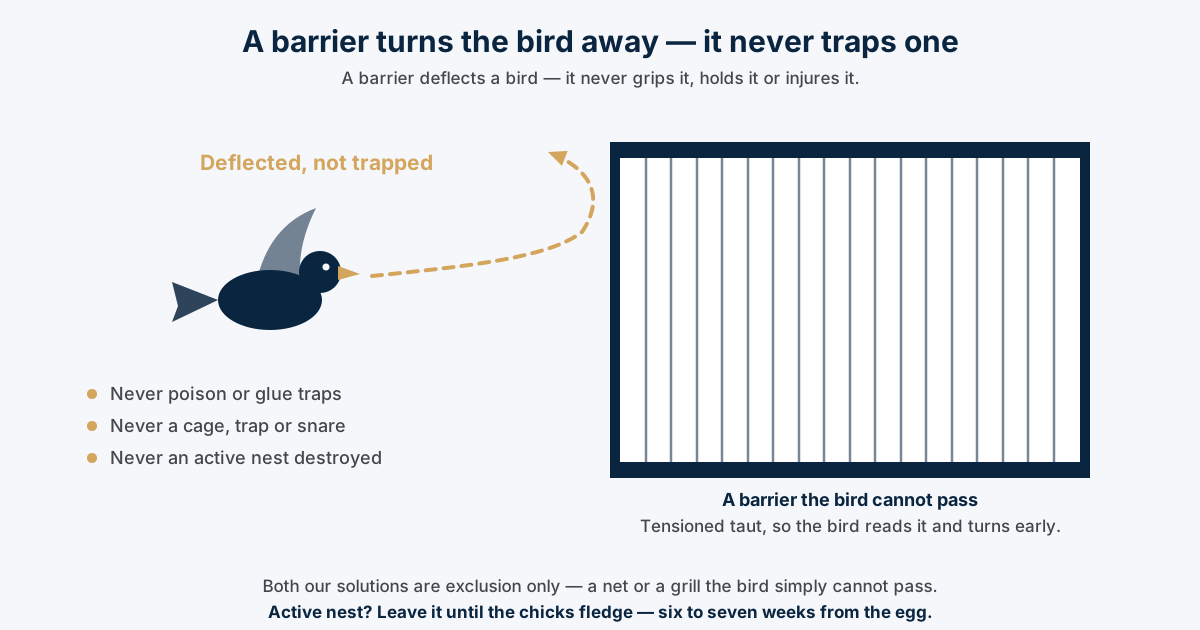
The short version: feeding the birds and closing your balcony are not the same decision. A barrier deflects a bird — it never grips it, holds it or wounds it. The things that do cause harm are poison, glue traps and, occasionally, badly installed spikes, and none of them are needed. If there is already a nest with eggs or chicks in it, the whole answer is patience: leave it until the chicks fledge, six to seven weeks from the egg, then close the gap that week.
Feeding the kabutar and closing the balcony are two different things
The grain you put out is an offering. The balcony is where your children play and where the washing dries. These are not competing commitments, and a lot of people talk themselves into months of misery by treating them as one.
The distinction the households we work with draw is between harming a bird and not hosting one. None of those families read closing a window as violence, and none of them feel obliged to host a nest indoors. A balcony barrier is the same act at a larger scale: the bird arrives, finds no opening, and flies to the next ledge — of which there are hundreds within a minute of your building. It is not deprived of anything, because the thing you have removed is an opening, not a life or a food source. And if you want to keep feeding, keep feeding. Ideally move the spot away from balcony faces and window ledges — a terrace corner or a designated point the society agrees on — so the grain does not double as an advertisement for the nesting sites above it.
Where the line actually is: does it deflect, or does it grip?
Every product sold for pigeons can be sorted with three questions, and this is the most useful test we know for anybody who cares about the answer.
Does it grip the bird? Anti-roost gel does. A bird that gets properly gummed loses the waterproofing of its feathers, and that is a slow harm rather than a deterrent. It is why we refuse to sell it.
Does it hold the bird? Glue boards, cage traps and anything sold as “catch and release” do. Trapping is stressful, relocation rarely goes the way the pamphlet says, and the ledge you emptied is refilled by another pair within weeks.
Does it wound the bird? Poison obviously does. Badly installed spikes sometimes do. A properly tensioned mesh or cable never does, because the bird does not make contact with it at speed — it approaches, reads a solid surface, and turns away.
Answer no to all three and you are on the no-harm side of the line. Both of the things we install answer no to all three, and so does simply closing a gap with a board. That is a bigger category than most people realise, and it contains every option that actually works long-term anyway. The full ranking of what works and what does not is in our comparison of nets, spikes and gel.
The nest question — the one that needs patience
This is where the anxiety actually sits, so let us be specific. Before you touch anything, work out whether the nest is active.
An active nest has eggs or chicks in it, or a bird sitting tight on it who does not leave when you come near. That last sign is the reliable one: pigeons are cautious birds and a pair that stays put is a pair with something underneath. An abandoned nest is a flat mat of twigs and old droppings with nobody attending it and no warmth in it.
If it is empty, clear it and close the gap the same day. Damp the material down before you lift it rather than sweeping it dry, and wear a mask and gloves — the reasons are in our guide to pigeon droppings and health risks. The closing matters as much as the clearing. Pigeons show strong site fidelity, and a cleared ledge left open is simply a clean ledge waiting for the same pair.
If it is active, the answer is to wait. Leave the nest completely alone until the chicks have fledged and gone — roughly six to seven weeks from the egg, counting the incubation and the weeks the chicks spend in the nest afterwards. Do not move it to a box or a different ledge; a relocated nest is usually an abandoned one. Do not destroy an active nest, and do not accept a vendor who offers to.
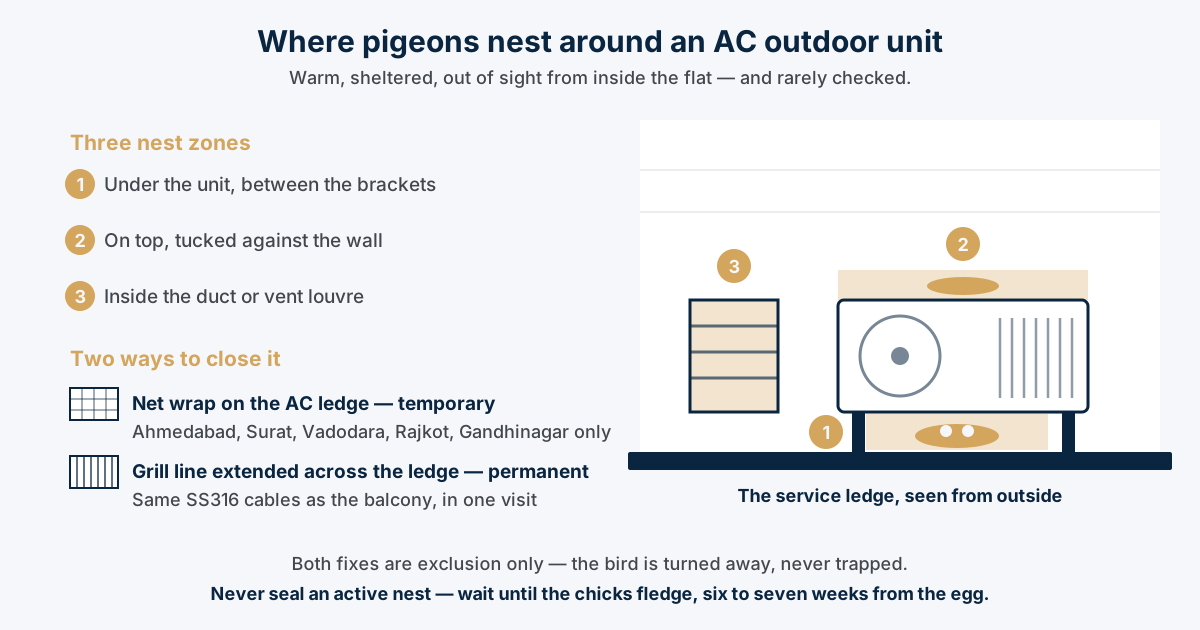
Use the waiting weeks rather than losing them. Get the survey done and the measurements taken now, so the installation can happen the week the nest empties instead of a month later. Keep the rest of the balcony clean so the pair is not also feeding there. If the nest is on the AC outdoor unit, have the unit checked and cleaned once they have gone, because nesting material packed into the condenser fins is what turns a bird problem into a compressor bill. And mark the calendar — the window to close the gap is the days right after fledging, before the pair starts the next clutch.
Poison and glue traps: never, and they do not even work
If any vendor suggests poison, glue boards or shooting, end that conversation. Beyond the cruelty, there is a plain practical objection: removing birds does not remove the reason they came. The ledge is still a good ledge, and another pair finds it within weeks. Meanwhile a poisoned bird usually dies somewhere you cannot reach — inside a shaft, behind a unit, above a false ceiling — and you have converted a manageable problem into an unreachable one. Exclusion works precisely because it changes the property rather than the population.
What to ask a vendor who says “humane”
The word is on a lot of quotations and means very little on its own. Three questions sort it out. What exactly touches the bird? What happens to a nest if we find one during installation? And what does this look like in three years — is anything degrading, coming loose, or turning into something a bird can get caught in? A vendor who answers the third one honestly is a vendor worth using.
Both of our fixes are exclusion, and nothing else
We install two things, and neither of them touches a bird. A pigeon net is a tensioned mesh across the opening — the temporary option, roughly ₹2,500–5,000 per install and needing replacement every 2–3 years as UV and monsoon do their work. We fit nets in Ahmedabad, Surat, Vadodara, Rajkot and Gandhinagar only. An invisible grill is SS316 marine-grade cable tensioned across the same opening — the permanent option, ₹95/sq.ft, about ₹9,500 once for a 100 sq.ft balcony, with a 10-year warranty and no replacement cycle. The side-by-side comparison has both columns if you are choosing between them.
There is one welfare detail worth knowing about the tensioned versions, and it is a small argument for doing the job properly. A taut barrier reads as a solid surface to an approaching bird, so it turns away cleanly. A slack, sagging net is the one that birds try to push through and occasionally snag in. Tension is not only about keeping pigeons out; it is the part that keeps the barrier harmless.
What to do this week
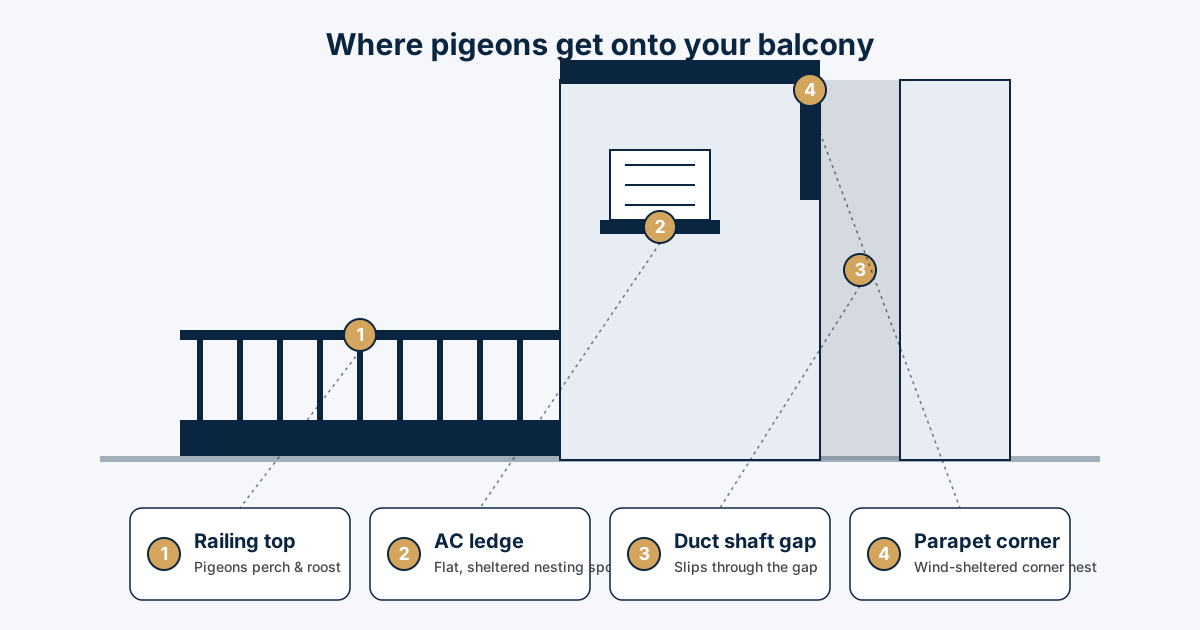
Check every ledge, the AC unit and the parapet corner for a nest, and note whether each one is active. If they are all empty, clear them, and close the openings the same week — the balcony guide marks the four places to check. If one is active, mark six to seven weeks from when you first saw eggs, book the survey now, and do the work in that window. Keep feeding the birds if that is your practice — just move the grain away from the balconies. Nothing in that plan harms a pigeon, and at the end of it your balcony is yours again.
Frequently Asked Questions
Common follow-up questions on this topic.
Is removing a pigeon nest a sin or illegal?
We are installers, not priests and not lawyers, so we will not answer either half of that as a ruling — but we can tell you how the families we work with handle it, and where the law is genuinely unsettled. On the first half: many households feel strongly that a nest with eggs or chicks in it must not be disturbed, and the path that keeps everyone comfortable is simply to wait. An active nest is left completely alone until the chicks fledge — roughly six to seven weeks from the egg — and the gap is closed immediately afterwards, before the pair starts again. An empty nest of twigs is a different matter and is normally cleared the same day. On the legal half, we would hedge: in day-to-day practice the feral city pigeon is not treated like a protected wild bird, but how the Wildlife (Protection) Act schedules apply to it is genuinely argued over, so we would not tell you it is definitively unprotected. Your housing society may also have its own rules about balcony enclosures and shared shafts, which is a more likely obstacle than any statute.
Do bird spikes hurt pigeons?
A well-made strip fitted properly is not designed to injure — the pins are blunt-tipped and the intended effect is that the bird finds no footing and leaves. But spikes are the one item in this category where bad installation can genuinely cause harm, and we would rather say so than pretend otherwise. Cut ends left proud after a strip is trimmed to length are sharp. A row set into a tight corner that a determined pair keeps trying to use is a bird pushing against metal repeatedly. And wide-gap spikes often end up as a nest frame, with twigs wedged between the wires and chicks raised among them. None of that is inevitable, and it is why the installation detail matters more here than the product brand. It is also part of why we do not fit spikes: a barrier across the opening has no version of this failure, because the bird never contacts it in the first place.
What is the most humane way to stop pigeons?
Exclusion — a physical barrier across the opening the birds use, fitted while the nest site is empty. It is the most humane option for a reason that has nothing to do with sentiment: the bird is never touched. It arrives, finds no way in, and goes to one of the many other ledges in your neighbourhood. Nothing grips it, holds it or wounds it, and there is no poison, no trap and no relocation. It is also the only approach that lasts, because it changes your building rather than trying to change the pigeon. There are two versions and both are pure exclusion. A pigeon net is the temporary one at roughly ₹2,500–5,000 per install, replaced every 2–3 years, and we fit nets in Ahmedabad, Surat, Vadodara, Rajkot and Gandhinagar only. An invisible grill is the permanent one at ₹95/sq.ft, about ₹9,500 for a 100 sq.ft balcony, with a 10-year warranty. Whichever you pick, time it around the nest rather than the other way round.
Choose your fix
Temporary net, or a permanent solution?
Pigeon net — temporary fix (2–3 years)
Installed by us in Ahmedabad, Surat, Vadodara, Rajkot & Gandhinagar only
See Pigeon Net PricingInvisible grill — permanent, child-safe
One-time SS316 marine-grade install. 10-year written warranty. No repeat cost, no re-tensioning.
Get Grill QuoteSee the full side-by-side: Pigeon net vs invisible grill → · Hindi mein padhein: kabutar jali vs invisible grill →
Ready to talk?
Free site visit. Itemised quote. No follow-up spam.
Same crew that measured you installs your grill. SS316 marine-grade only. 10-year written warranty.